


Every Shopify Editions drops a wave of features, but Winter ’26 feels different. This one wasn’t just about tooling. It was about a shift in how merchants expect to operate and how Shopify expects its ecosystem to evolve.
If you’re building apps on Shopify, this update cycle is a reminder of one thing:
The bar is rising, and the opportunity space is widening at the same time.
A quiet question has started buzzing through developer threads:
“Is this the beginning of apps becoming obsolete?”
Short answer: no.
Long answer: Shopify is expanding the canvas, not closing it. And Winter ’26 proves it.
1. Sidekick Extensibility: The Most Important Developer Update
https://shopify.dev/docs/apps/build/sidekick
If you read only one section of the Editions recap, let it be this.
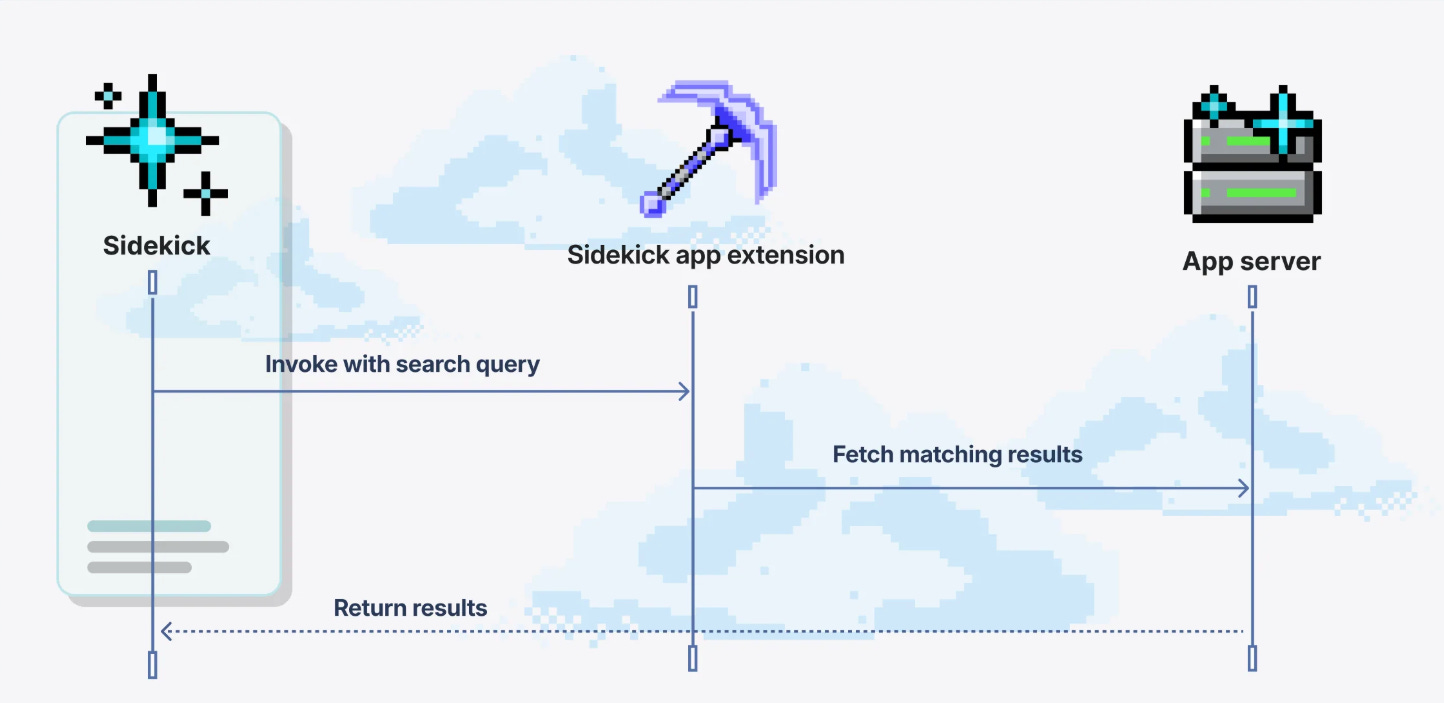
Sidekick Extensions fundamentally change how merchants interact with apps.
You’re no longer building features that live next to merchant workflows.
You’re building intelligence that lives inside their workflows.
Developers can now:
Expose app capabilities through natural-language prompts
Allow merchants to trigger app actions without UI friction
Inject their logic directly into Sidekick’s conversational interface
Even construct custom app behaviors through Sidekick itself
Yes, merchants can “build” with Sidekick now. But that doesn’t diminish the role of apps.
If anything, it expands it.
Merchants can prototype ideas with Sidekick.
But when they need scale, reliability, debugging, audits, security, or ongoing evolution, they will turn to apps.
Sidekick becomes the on-ramp, not the substitute.
At Swym, we’re already thinking about what this unlocks.
Imagine a merchant asking Sidekick:
“Show me the top wishlisted items that are back in stock this week and schedule reminders automatically.”
That type of workflow isn’t a UI feature.
It’s conversational commerce infrastructure.
And apps like Wishlist Plus are uniquely positioned to power it.
2. Native A/B Testing: A Signal About Merchant Maturity
Shopify adding first-class A/B testing is not about replacing experimentation apps, it’s about legitimizing behavioral testing as a core operating model.
For developers, this means:
Standardized schemas for experiment variants
Cleaner integrations for optimization or personalization apps
A merchant base newly conditioned to test, measure, and refine
This shift matters.
Apps that interpret test results, automate variant creation, or correlate experiments with user behavior will thrive.
For Swym, this could mean letting merchants:
Test different wishlist CTA styles
Understand how nudges perform
Optimize back-in-stock timing or messaging
The platform giving merchants testing muscle means apps get to offer more sophisticated strategies on top of it.
Added bonus is Simgym, an AI-driven shopper behavior simulator that works like a pre-launch predictive testing environment. Instead of only relying on real traffic and A/B experiments after deployment, SimGym lets merchants run AI shopper simulations based on data from billions of past transactions to estimate how changes might perform.
3. Shopify Network: The Unbundled, Everywhere Shopify
The introduction of Shopify Network makes one thing clear:
Shopify knows the ecosystem now lives far beyond the storefront.
This layer connects shoppers, channels, apps, and stores into a cohesive experience.
For developers, this unlocks:
More surfaces where your app can provide value
More events that flow between touchpoints
More opportunities to be part of a shopper’s journey
Swym has always believed commerce isn’t linear.
A shopper moves between emails, search engines, social feeds, PDPs, and back again.
A wishlist event shouldn’t be siloed, it should fuel the entire network.
Shopify Network validates this philosophy.
4. Global Catalog Moves Center Stage
Global Catalog used to be powerful but peripheral.
Winter ’26 brings it into the center of everything.
It’s now the authoritative source for:
Global product attributes
Multi-market pricing
Translations
Inventory synchronization
Multi-store governance
And this aligns beautifully with the new Merchant Hub, built around omnichannel control.
For app developers, the implications are clear:
Think global-first, not store-first.
Apps need to handle:
Cross-market logic
Product variants that differ by region
Attribute-driven automation
Centralized intelligence
For Swym, this shift is huge. A wishlist isn’t just a “store” feature anymore. It’s a product affinity layer across all markets.
Building on Global Catalog allows wishlist and nudge intelligence to become globally consistent while respecting local rules.
5. Metafield Filtering: Quiet but Transformative
One of the quieter updates, metafield filtering and richer querying, is actually a major win for developers.
You can now:
Query metafields with more precision
Filter based on conditions
Build richer admin experiences
Reduce API overhead
For any app that depends on merchant-defined product attributes (which is most apps), this is a quality-of-life upgrade.
6. Token Expiry for Offline Access Tokens
A light-touch update but an important one. Offline access tokens now expire, which means apps need to refresh tokens periodically.
This is good security practice.
It doesn’t change how apps fundamentally operate, it simply formalizes a more responsible model.
It’s not something to highlight to merchants; it’s just something developers should quietly adopt.
7. So Are Apps Becoming Obsolete? Absolutely Not.
With Sidekick, Network, Global Catalog, testing, and new admin surfaces, it’s easy to wonder if Shopify is closing in on the space apps occupy.
But the opposite is happening.
Shopify is strengthening the foundation so apps can build the differentiated value.
Every update in Winter ’26 signals that:
Shopify wants AI-native workflows
Shopify wants globally consistent product data
Shopify wants omnichannel-first execution
Shopify wants more interconnected flows
Shopify wants apps deeply embedded into merchant operations
This is not a land-grab. It’s a platform uplift.
When Shopify raises the floor, app developers get to raise the ceiling.
And Swym’s perspective here is simple:
These updates don’t reduce the role of apps, they increase the expectations of what great apps should do.
Merchants will expect smarter automation, deeper personalization, and intelligence across surfaces.
Apps that lean into this will shape the next generation of commerce experiences.
8. The Path Forward for App Developers
Here’s what the next era of Shopify apps will be built around:
Conversational workflows powered by Sidekick
Global Catalog as the canonical product data layer
Omnichannel orchestration via Merchant Hub
Optimization powered by native A/B testing infrastructure
Network-informed shopper journeys
Richer, cleaner data access
For Swym, this means doubling down on our core belief:
helping merchants engage shoppers intelligently, across channels, with minimal workflow friction.
The platform is giving us the surfaces, it’s up to apps to bring the intelligence.
Final Thought
Winter ’26 isn’t the story of Shopify replacing apps.
It’s the story of Shopify expanding what apps can be.
For any team building in this ecosystem, this is the moment to lean in, because merchants are about to expect more intelligence, more automation, more omnichannel visibility, and more embedded experiences than ever.
And the apps that embrace this shift will define the next cycle of commerce innovation.
Thats a powerful, quick and neat analysis @sakshi. Kudos!